Golden Visa Status in 2026
The single most important fact for anyone researching property investment in Portugal: buying real estate no longer grants access to the Golden Visa. This changed in October 2023, and the rule remains unchanged in 2026.
What changed in October 2023
Under Law 56/2023 ("Mais Habitação"), the Portuguese government removed real estate purchases and capital transfers from the list of investments eligible for the Golden Visa (officially the ARI — Residence Permit for Investment Activity). This was a deliberate policy decision aimed at reducing the impact of foreign investment on local housing prices, not a sign that the programme is ending.
What still qualifies for the Golden Visa in 2026
- Qualifying investment funds: minimum €500,000 into a non-real-estate collective investment vehicle registered with the CMVM, with at least 60% invested in Portuguese companies
- Job creation: creating a minimum of 10 full-time jobs in Portugal
- Scientific research: minimum €500,000 contribution to research activities at eligible Portuguese institutions
- Cultural heritage donation: from €250,000, supporting artistic production or heritage preservation
- Business capitalisation: minimum €500,000 to form or expand a Portuguese company with job creation
Is the programme still worth pursuing?
For investors seeking EU residency rights, Schengen mobility, and a long-term path toward Portuguese citizenship, the Golden Visa remains active and continues to receive thousands of applications a year. However, the path to citizenship was extended under the 2026 Nationality Law reform — most applicants now wait 10 years (7 years for EU/CPLP nationals), up from the previous 5-year benchmark some investors expected.
Can Foreigners Buy Freely?
Yes — without exception. Portugal places no restrictions on foreign ownership of property, regardless of nationality, residency status, or EU membership.
Any individual or company, from any country, can purchase residential or commercial property in Porto and across Portugal. The process is identical to that of a Portuguese national, with two additional administrative steps for non-residents: obtaining a Portuguese tax number (NIF) and, in most cases, appointing a fiscal representative.
You do not need to be a resident of Portugal, hold a visa, or have any prior connection to the country to buy property here. Ownership itself does not grant residency or any visa status — the two are entirely separate matters.
NIF & Fiscal Representative
These two requirements are the only real administrative gateway for foreign buyers — and both are straightforward to arrange, often remotely.
What is a NIF?
The NIF (Número de Identificação Fiscal) is Portugal's tax identification number. It is required before signing any property-related contract, opening a Portuguese bank account, or paying any tax in Portugal.
How to obtain a NIF as a non-resident
- In person at a Finanças (tax) office in Portugal, with a valid passport
- Through a Portuguese consulate in your country of residence
- Remotely, via a lawyer or authorised representative acting on your behalf with a power of attorney
Fiscal representative
Non-EU/EEA/Swiss residents are legally required to appoint a fiscal representative based in Portugal — an individual or company that receives official correspondence from the Tax Authority (AT) on your behalf and ensures your filings remain compliant. EU/EEA/Swiss residents are exempt from this requirement, although many still choose to appoint one for convenience.
Need help arranging your NIF or fiscal representation?
We work with trusted local lawyers who handle this remotely for international clients.
Non-Resident Taxation
Non-residents are taxed differently from Portuguese tax residents on property-related income — generally at a flat rate, without access to the progressive scale or certain exclusions available to residents.
| Tax | Non-resident rate | Notes |
|---|---|---|
| Rental income (IRS) | 28% flat | On net rental income; no progressive scale applied |
| Capital gains on sale | 28% flat on full gain | No 50% exclusion available to residents |
| IMT (purchase tax) | 0% – 8% | Same scale as residents, based on price and use |
| Stamp Duty | 0.8% | Same rate as residents |
| IMI (annual property tax) | 0.3% – 0.45% | Same municipal rate as residents |
Double Taxation Treaties
Portugal has Double Taxation Agreements with more than 70 countries, including the United States, the United Kingdom, and every EU member state. These treaties generally allow you to offset Portuguese tax paid against tax owed in your home country, avoiding being taxed twice on the same income — though the exact mechanism depends on your country's specific treaty and domestic rules.
An important exception for EU/EEA residents
Following a 2021 European Court of Justice ruling, EU/EEA tax residents selling Portuguese property may opt to be taxed under the resident regime (which includes the 50% exclusion) if it results in a lower overall tax burden than the standard 28% non-resident rate.
NHR / IFICI Tax Regime
If you are researching Portugal's famous "10% pension tax" or "NHR" status, it is important to know this regime in its original form no longer exists for new applicants.
The classic NHR regime has closed
The original Non-Habitual Resident (NHR) regime, which for over a decade offered new tax residents reduced rates and broad exemptions on foreign-source income for 10 years, closed to new applicants on 31 March 2025. Anyone who secured NHR status before that cutoff keeps their benefits for the original 10-year period, typically running until 2033 or 2034 for the last cohort.
IFICI — the regime that replaced it
Since 2024, Portugal offers IFICI (Incentivo Fiscal à Investigação Científica e Inovação), informally known as "NHR 2.0". It offers a 20% flat tax rate on qualifying Portuguese income for up to 10 years — but it is far more restrictive than the original NHR:
- Limited to highly qualified professionals in fields such as scientific research, technology, engineering, and innovation-driven industries
- No longer covers retirees, general investors, or most remote workers and digital nomads, unless their profession qualifies
- No longer offers the 10% flat rate on foreign pensions that made the original NHR popular with retirees
What this means for property investors
If your primary interest in Portugal is property investment rather than relocating as a qualifying professional, you should plan around standard Portuguese tax rates (or the non-resident rates above, if you remain tax resident elsewhere) rather than assuming access to a special regime. Owning Portuguese property does not, by itself, grant any tax status.
Step-by-Step Buying Process
The process is the same whether you are Portuguese or foreign — the steps below typically take 6 to 10 weeks from offer to completion.
- Search & budget: define your total budget (purchase price plus 6–10% in taxes and fees), area, and criteria.
- Obtain your NIF before making any formal offer — most agencies and notaries will require it early.
- Due diligence: we verify the Certidão Permanente (land registry), Caderneta Predial (tax record), usage licence, and condominium status before any commitment.
- CPCV (promissory contract): signed with a deposit of 10–20% of the price, locking in the purchase price and completion date.
- Mortgage approval (if applicable): non-residents can secure Portuguese mortgages, typically at lower loan-to-value ratios (60–70%) than residents.
- Pay IMT and Stamp Duty before completion, at a Finanças office or online.
- Escritura (deed): signed before a notary or at a Casa Pronta desk. Final payment and transfer of ownership take place here.
- Land registry update: the property is registered in your name at the Conservatória do Registo Predial.
Why Porto for Investment
Porto offers a combination of price accessibility, rental demand, and quality of life that has attracted growing international attention in recent years.
Best Neighborhoods to Buy in Porto
Each area of Porto has a distinct profile, price point, and buyer fit. Here is an honest, at-a-glance comparison to help you narrow down where to look — click through to any guide for the full picture.
Looking for the full picture — pricing tables, transport, schools, and FAQs for every area? Browse our complete area guides, or talk to us about which neighborhood best fits your goals.
Related Articles
Go deeper into topics specific to your investor profile or your move to Porto.

The complete market analysis: premium neighbourhoods, 2026 taxation, off-market access and the safe buying process — with INE, Bank of Portugal and idealista data.
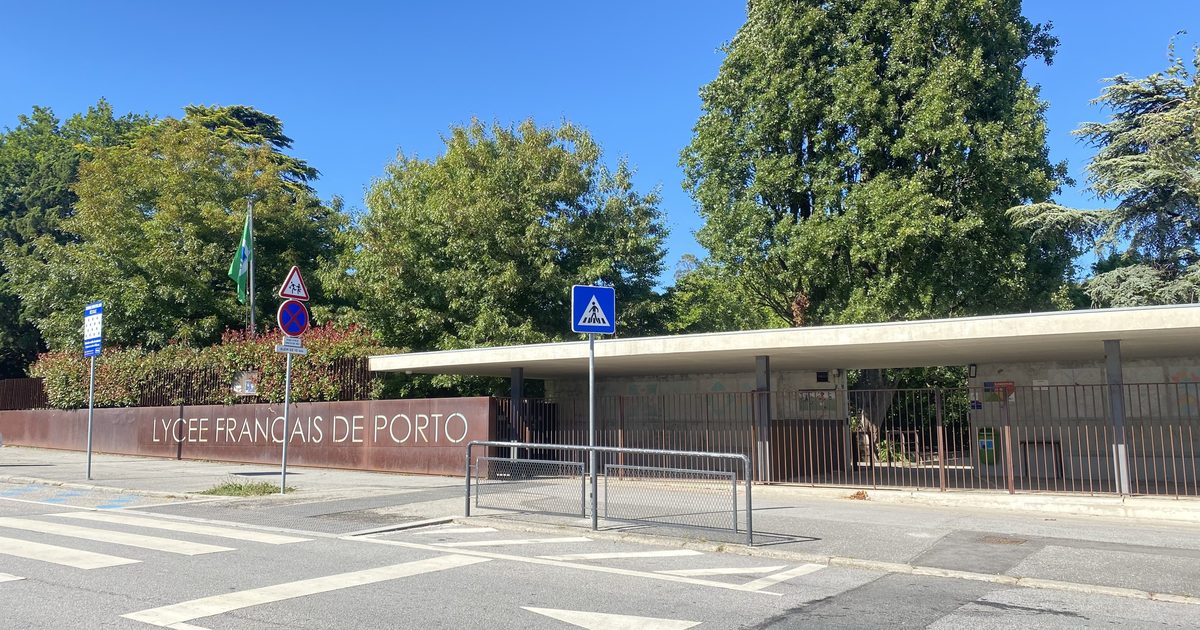
International schools, parks, safety, and the real school integration process — a practical guide for those moving to Porto with children.

Healthcare, safety, climate and cost of living — and the truth about what changed in pension taxation.
Frequently Asked Questions
Ready to explore investment opportunities in Porto?
Talk to our English-speaking team — no commitment.